
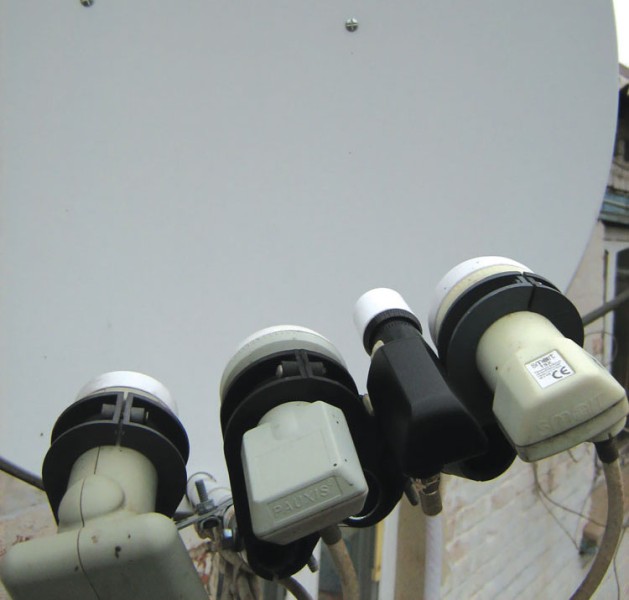
Eutelsat 9B is located in orbit at 9.0°E and works in the Ku band (10.7–12.75 GHz). For stable reception in Ukraine an antenna with a diameter of 80–90 cm is enough. A multifeed — is a way to simultaneously receive two or three neighboring satellites with a single dish, without spending money on a rotor.
What is needed for mounting a multifeed?
Before work, prepare everything in advance:
- An offset antenna 80–90 cm (for central and eastern Ukraine), 90–100 cm for the west.
- A multifeed bar for 2–3 LNBs.
- Two Universal Single LNBs or one Universal Twin with a noise figure of 0.1–0.2 dB (Inverto Black Ultra, Gibertini OP 05).
- Coaxial cable RG-6 or SAT703B, F-connectors, a multiswitch or a DiSEqC 2/4 switch.
- A smartphone with the Satellite Finder app (Android/iOS) or Dishpointer.
- A level, a protractor, 13 and 17 wrenches.
How to calculate the azimuth and elevation for your city?
Below are ready-made values for three cities. The data is calculated for Eutelsat 9B (9.0°E):
| City | Azimuth (°, from N clockwise) | Elevation (°) | Polarization angle (°) |
|---|---|---|---|
| Kyiv | 199 | 29 | -4 |
| Kharkiv | 202 | 27 | -5 |
| Lviv | 192 | 30 | -2 |
For other cities use the site dishpointer.com: enter the coordinates and the position 9.0E — you will get exact figures in seconds.
How to install the multifeed bar and the second LNB?
The main LNB is mounted at the antenna's focus. The second is shifted along the bar by 15–25 mm for each degree of difference between the satellites. For the pair Eutelsat 9B (9.0°E) and Astra 1 (19.2°E) the shift comes out to about 150–160 mm. The exact position is selected by the maximum signal level on both positions in turn — we checked this on a bench with a 90-centimeter offset dish and got a stable result on the first try.
The mounting order:
- Fix the bar on the antenna bracket horizontally.
- Install the main LNB in the central holder, the second — in the side one with a preliminary shift.
- Connect the cables to the DiSEqC switch, mark the ports with a marker.
- Connect the switch to the receiver with a single cable.
Which transponders to use to search for the signal?
Active Eutelsat 9B transponders for the initial setup:
| Frequency (MHz) | Polarization | SR (Bd) | FEC |
|---|---|---|---|
| 11480 | V | 27500 | 5/6 |
| 11568 | H | 27500 | 3/4 |
| 11606 | V | 27500 | 2/3 |
Enter these parameters manually in the receiver menu — the „Manual Search” or „Manual Scan” section. Standard: DVB-S2.
How to connect the multifeed to the receiver and configure DiSEqC?
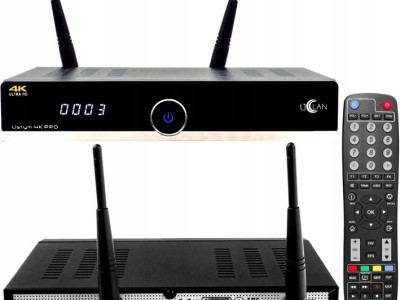
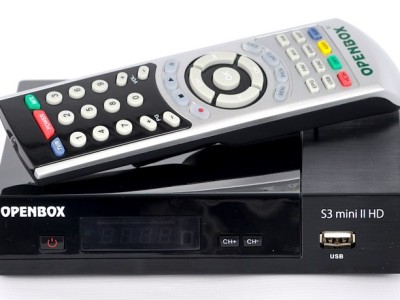
Go into the receiver menu to the antenna settings. Assign each satellite a separate DiSEqC port: Port A = Eutelsat 9B, Port B = the second satellite. Save and start an automatic search on the chosen position. If the receiver supports Unicable (EN50494), a single cable serves two tuners without any switch — convenient when the route is hard to lay.
What to do if the signal is weak or unstable?
Why does the signal disappear at all? The causes are usually trivial:
- An azimuth error greater than 1–2° — check with a compass and the Satellite Finder app.
- An obstacle in the line of sight (a tree, a roof) — change the mounting location or raise the mast.
- Oxidized F-connectors — replace them, treat with a sealant.
- A cable longer than 30 m without an amplifier — add an inline amplifier or shorten the route.
- An incorrect shift of the side LNB — move it by 5 mm and check the signal level after each step.
FAQ
- What is the minimum antenna diameter for Eutelsat 9B in Ukraine?
- 80 cm for the center and east, 90–100 cm for the west of the country. With obstacles or for a better signal-level margin, take one 10 cm larger.
- Can a single LNB be used for a multifeed?
- No. Each satellite position requires a separate LNB. A multifeed bar holds 2–4 converters at once.
- How long does mounting a multifeed take?
- An experienced person spends 2–4 hours, a beginner — 6–8 hours together with configuring the receiver.
- What is the difference between DiSEqC 1.0 and DiSEqC 1.1 for a multifeed?
- DiSEqC 1.0 supports up to 4 ports (4 LNBs or 4 satellites), DiSEqC 1.1 — up to 16. For a home multifeed with 2–3 positions DiSEqC 1.0 is quite enough.
- Is a rotor needed to receive Eutelsat 9B together with other satellites?
- No, if the satellites are located within 15–20° of each other. A multifeed bar replaces a rotor for a fixed set of positions.
No comments yet. Be the first!